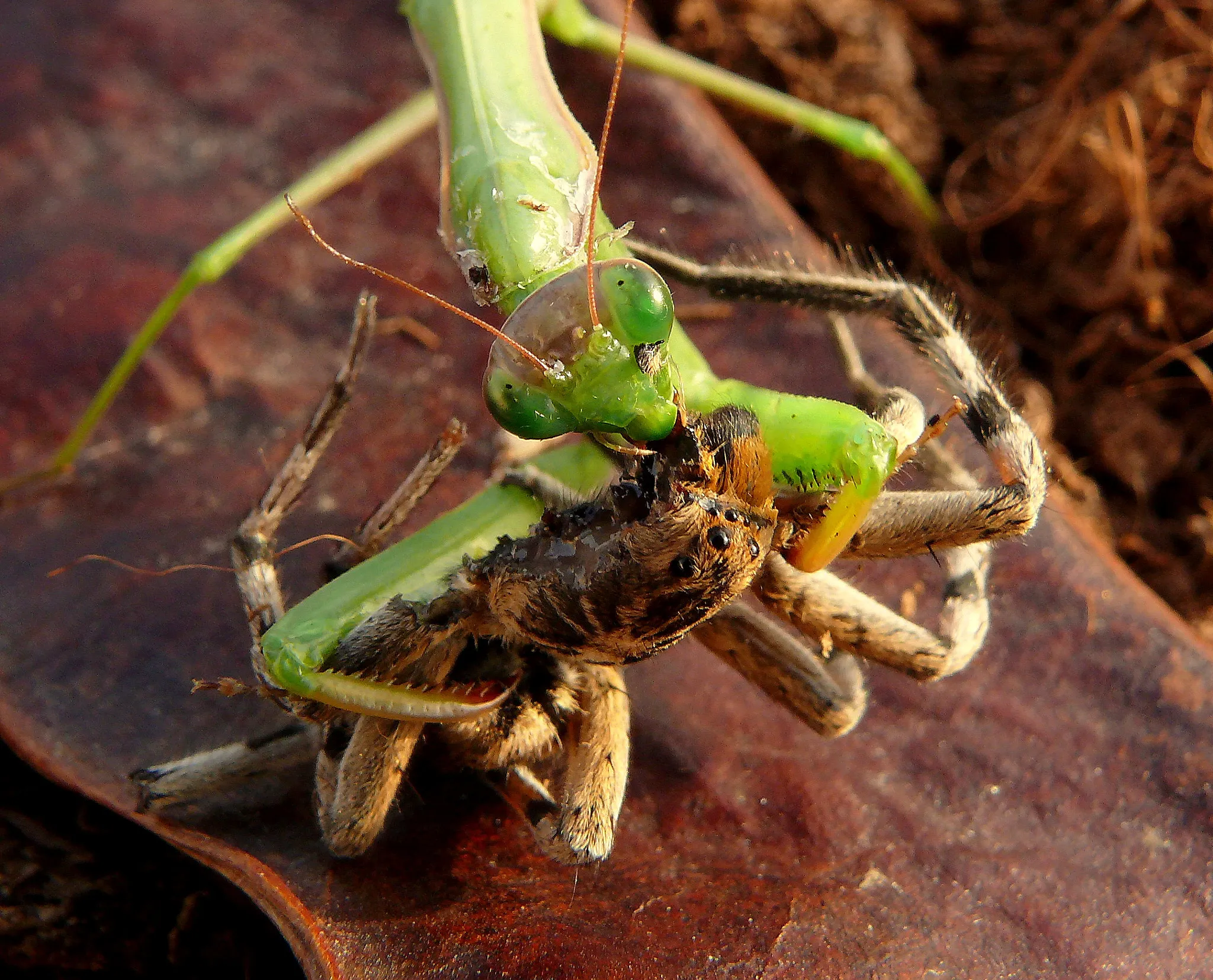
Mantis vs Tarantula Who Wins Overview
The insect world is full of incredible creatures, and few matchups are as captivating as a fight between a praying mantis and a tarantula. Both are formidable predators in their own right, equipped with unique hunting strategies and impressive physical attributes. This article will delve into the details of these two contenders, analyzing their strengths, weaknesses, and the factors that could determine the victor in a potential clash. We’ll explore their anatomy, hunting techniques, and combat capabilities to offer a comprehensive understanding of who would likely emerge victorious in a Mantis vs Tarantula fight. Prepare to discover the intricacies of this epic insect and arachnid showdown.
Mantis Anatomy and Hunting
Mantis Physical Characteristics

Praying mantises are easily recognized by their elongated bodies, triangular heads, and large, compound eyes that provide excellent vision. Their most distinctive feature is their raptorial forelegs, which are perfectly adapted for catching prey. These legs are equipped with sharp spines that secure the victim in a vise-like grip. Mantises come in various sizes and colors, often blending seamlessly with their environment thanks to their camouflage abilities. Their strong mandibles are capable of delivering powerful bites, and their agility allows them to quickly change positions to ambush or evade their opponents. Their size ranges from under an inch to over 6 inches depending on the species, which affects their hunting capacity.
Mantis Hunting Techniques
Mantises are ambush predators, waiting patiently for their prey to come within striking distance. They use their camouflage to blend into their surroundings, remaining motionless until the opportune moment. When a target is spotted, the mantis strikes with lightning speed, using its raptorial forelegs to snatch the prey. The spines on the legs secure the prey, preventing escape. Mantises are generalist predators, feeding on a wide range of insects and sometimes even small vertebrates. Their hunting style relies heavily on stealth, patience, and precision. They can rotate their heads nearly 180 degrees, providing a wide field of view and making them incredibly aware of their surroundings. Their ability to stay hidden gives them a significant advantage in any combat.
Tarantula Anatomy and Hunting
Tarantula Physical Characteristics

Tarantulas, large, hairy spiders, are also formidable predators. They possess eight legs, two chelicerae (fangs), and a body divided into two main parts: the cephalothorax (head and thorax combined) and the abdomen. Their size varies greatly depending on the species, with some capable of reaching a leg span of over 10 inches. Tarantulas have fangs that they use to inject venom into their prey, paralyzing them. They also have spinnerets that produce silk, which they use to line their burrows, build webs, or wrap their prey. Their bodies are covered in sensory hairs that help them detect vibrations, allowing them to sense the presence of potential prey or threats.
Tarantula Hunting Techniques
Tarantulas are ambush predators, often waiting in burrows or concealed locations for prey to come near. They can also actively hunt, stalking their targets. When prey is within reach, the tarantula quickly attacks, using its fangs to inject venom. The venom paralyzes the prey, and the tarantula then injects digestive enzymes to break down the tissues, allowing it to suck up the liquefied meal. Tarantulas primarily feed on insects, but larger species can also prey on small vertebrates, such as lizards and rodents. They are very sensitive to vibrations, which helps them locate their prey. They use their fangs to inject venom and their strong jaws to subdue their victims.
Mantis vs Tarantula Combat Analysis
Size and Strength Comparison

In terms of size, tarantulas generally have the advantage. While some mantis species can be quite large, many tarantulas can significantly outweigh and outsize a mantis. This size difference gives the tarantula a strength advantage. The larger size translates to more powerful bites, stronger legs, and greater overall resilience. However, the mantis has the benefit of being incredibly agile. The mantis can use its agility and superior maneuverability to avoid attacks. A larger size doesn’t always equate to victory; in this case, the tarantula would have to successfully grapple with the mantis to benefit from its size. The combination of size and strength would be a deciding factor if the tarantula is able to pin the mantis.
Attack Strategies Comparison
The mantis relies on a quick, precise strike with its raptorial forelegs. It aims to quickly grab and hold its prey, and the spines on its legs make escape difficult. The tarantula, on the other hand, uses a combination of biting with its fangs and injecting venom. The venom paralyzes the prey, making it easier to subdue. The mantis’s attack is quick and decisive, while the tarantula’s relies on a slower process of delivering venom and waiting for it to take effect. The mantis’s attack is all or nothing, it’s either successful, or the mantis has to rethink its strategy. The tarantula can retreat and re-engage once it has delivered its venom. The success of these strategies also depends on the size and species of both contenders.
Defense Mechanisms Comparison
The mantis relies on its speed, agility, and camouflage to avoid attacks. Its ability to blend into its surroundings gives it an advantage in ambush situations. If caught, the mantis can use its powerful mandibles to bite and attempt to escape. The tarantula has several defensive mechanisms, including its size, strong fangs, and urticating hairs (in some species) that can irritate or deter predators. Its exoskeleton provides protection from attacks. The urticating hairs can be flicked at a potential threat, causing irritation and potentially deterring the attacker. The tarantula’s size and venomous bite are key defensive mechanisms.
The Fight Outcome

Factors Influencing the Outcome
Several factors could influence the outcome of a mantis vs tarantula fight. Size is a significant factor, with larger tarantulas having a distinct advantage. The species of both creatures also plays a role, as some mantis and tarantula species are more aggressive or have different hunting strategies. The environment in which the fight takes place matters, with the mantis having an advantage if it can use its camouflage to its advantage. The general health and condition of each insect also will contribute. The success of the fight will be highly dependent on the individual insects and their species. A larger, more aggressive tarantula species would have a higher likelihood of winning.
Where the Fight Takes Place
The location of the battle also plays a role. A mantis might have an advantage in an environment with plenty of foliage and hiding spots, allowing it to use its camouflage effectively. A tarantula, on the other hand, might have an advantage in an open area where it can use its size and strength more effectively. A fight in a confined space could change the strategies that each creature can use. The fight could be determined by whichever contender controls the best environment for their fighting style. The mantis would need cover to survive, while the tarantula would prefer an open space.
Conclusion

While the outcome of a mantis vs tarantula fight depends on various factors, including size, species, and environment, the tarantula generally has an advantage. Its larger size, stronger bite, and venomous fangs give it a significant edge in a direct confrontation. However, the mantis’s agility, camouflage, and precise strikes give it a chance, particularly if it can exploit the tarantula’s weaknesses. Ultimately, the winner of this battle of titans would depend on the specific circumstances of the fight, and the outcome is far from guaranteed. It’s a fascinating matchup that highlights the diverse survival strategies in the insect and arachnid worlds.