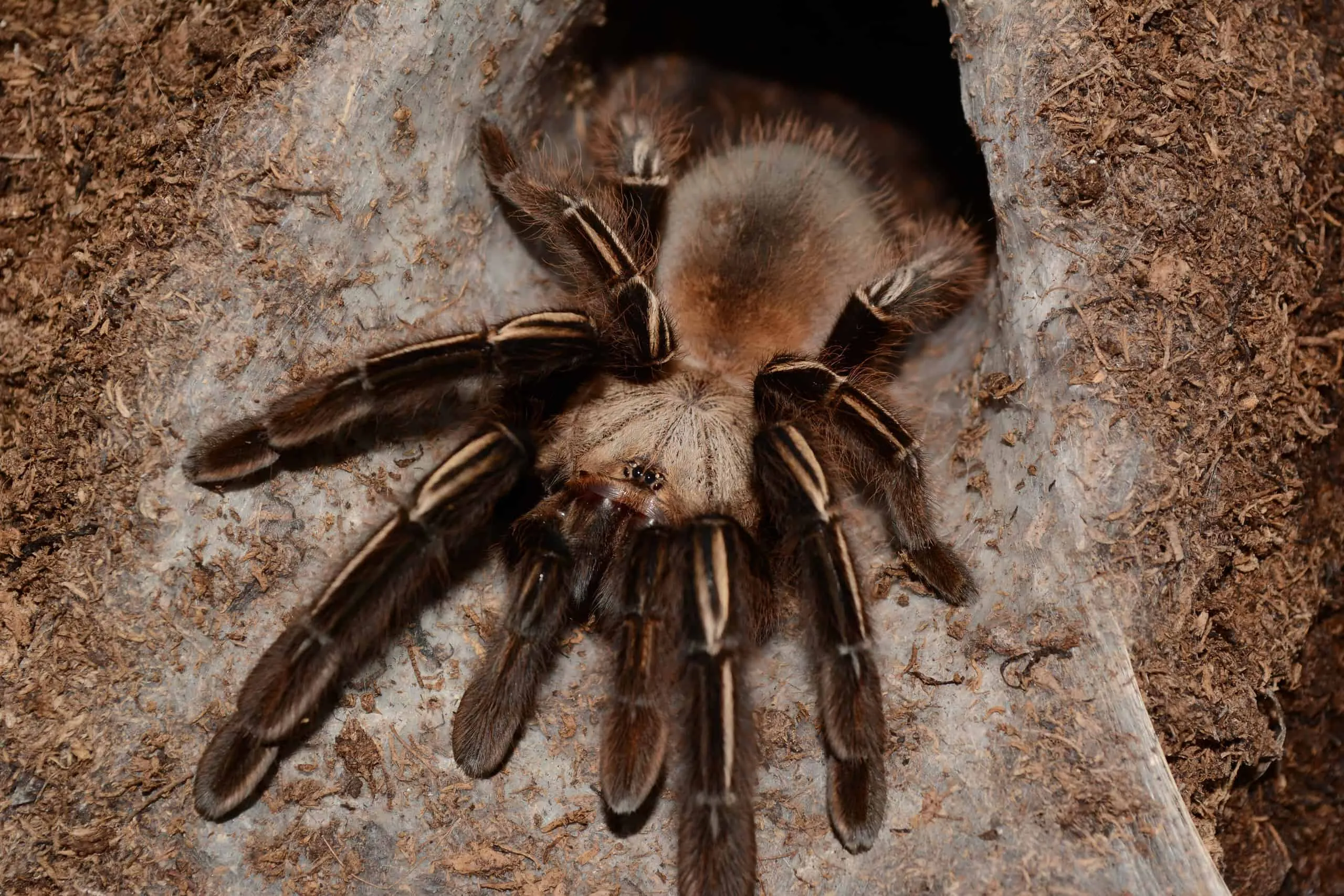
What are Tarantulas?
Tarantulas are large, hairy spiders belonging to the Theraphosidae family. These impressive arachnids are found in various habitats around the world, from the deserts of the southwestern United States to the rainforests of South America. Known for their size and often vibrant colors, tarantulas capture the attention of both enthusiasts and those simply curious about the natural world. They are nocturnal hunters, primarily preying on insects, but some larger species are known to consume small vertebrates. Despite their fearsome appearance, many tarantula species are relatively docile and have become popular pets. Understanding tarantulas involves appreciating their unique biology, including their vision, which is a fascinating aspect of their survival.
Anatomy of a Tarantula
To understand the importance of their eyes, it’s essential to grasp the overall anatomy of a tarantula. Like all spiders, tarantulas have two main body sections: the cephalothorax (fused head and thorax) and the abdomen. The cephalothorax is where the eyes, mouthparts (chelicerae and pedipalps), and legs are attached. The abdomen houses the digestive and respiratory systems, as well as the spinnerets used for silk production. Tarantulas have eight legs, each ending in claws that help them climb and navigate different terrains. Their bodies are covered in a dense layer of hairs, some of which are sensory and help them detect vibrations and air currents. This complex anatomy supports the tarantula’s survival, with each part playing a crucial role in its ability to hunt, defend itself, and reproduce.
The Eyes of a Tarantula

The eyes of a tarantula are critical for its survival, allowing it to perceive its environment and hunt prey. Unlike humans, tarantulas do not have excellent eyesight, but their eyes are perfectly adapted to their lifestyle. The number and arrangement of their eyes can vary slightly between species, but they generally have eight eyes. These eyes are relatively simple compared to human eyes, with a basic lens system that allows them to detect movement and light changes. Their visual system is especially sensitive to motion, which helps them identify potential prey or predators. The specific placement and function of each eye contribute to their overall visual capabilities, ensuring they can navigate their surroundings effectively.
How Many Eyes Do Tarantulas Have?
Most tarantulas possess eight eyes. This is a common trait among spiders, and the arrangement and function of these eyes allow them to see in ways that are different from how humans see. While eight eyes might seem like an advantage, it’s important to understand that tarantulas do not have the same level of visual acuity as many other animals. Their eyes are more adept at detecting movement and changes in light intensity rather than providing detailed images. This is because they are adapted to low-light environments and rely on other senses, like the detection of vibrations, to hunt and navigate. The number and type of eyes also vary among tarantula species, which is another interesting facet of their visual adaptations.
Placement and Function of Tarantula Eyes
The eyes of a tarantula are positioned on the cephalothorax in a specific arrangement. Typically, they are arranged in two rows. The primary eyes, located at the front, are the main eyes that provide the tarantula with its primary source of vision. These are often the largest eyes and are primarily used for detecting movement and changes in light. The secondary eyes are positioned on the sides and top of the cephalothorax, and they help the tarantula perceive a wider field of view. The placement of these eyes allows the tarantula to scan its surroundings, detect potential threats, and locate prey effectively. This unique visual system allows them to thrive in their environments.
Primary Eyes

The primary eyes of a tarantula are generally the most developed, although they do not provide the same level of visual acuity as human eyes. They are responsible for forming the basic visual input and are often the first to detect movement. These eyes are crucial for identifying potential prey and predators from a distance. The structure of the primary eyes enables the tarantula to perceive changes in light and dark, which is useful for navigation in low-light conditions. They also play a role in helping the tarantula to determine the distance to an object, although this is not as precise as in animals with superior vision.
Secondary Eyes
Secondary eyes provide a wider field of view and are specialized for detecting movement. Positioned on the sides and top of the cephalothorax, they assist in detecting potential threats from multiple directions. These eyes are not as detailed as the primary eyes, but they are incredibly sensitive to motion. This is essential for the tarantula’s survival in the wild, as it helps them avoid predators and locate prey. The secondary eyes also assist in depth perception, enhancing their ability to judge distances when hunting or navigating.
What Can Tarantulas See?
Tarantulas do not see the world in the same way humans do. Their vision is suited to their lifestyle, which involves nocturnal hunting in low-light conditions. Their eyes are more adept at detecting movement, shadows, and changes in light intensity, rather than providing detailed images or color vision. They see the world in a simplified manner, focused on patterns and contrasts. This helps them to identify prey and predators, and navigate their surroundings effectively. Their visual system is therefore highly specialized for their survival, enabling them to thrive in diverse environments.
Tarantula Vision in Detail

The visual system of a tarantula is adapted to its nocturnal and crepuscular lifestyle. Their eyes are particularly sensitive to motion, which is critical for both hunting and avoiding danger. The primary eyes are responsible for forming basic images and detecting objects from a distance, while the secondary eyes provide a broader field of view and detect movement in the periphery. Tarantulas have limited color vision, and they likely see the world in shades of gray. Their visual acuity is not as high as that of some other predators, but their ability to detect movement and changes in light allows them to effectively hunt and navigate their environment.
How Tarantulas Use Their Eyes
Tarantulas use their eyes in a variety of ways to survive. The primary use is for hunting, where they detect movement of potential prey, such as insects. They can also use their eyes to avoid predators. Their visual system helps them judge the distance to an object, allowing them to accurately pounce on their prey or quickly retreat from danger. In addition to hunting and defense, tarantulas also use their eyes for navigation. Their ability to see in low-light conditions enables them to find their way in their environment, and they can use visual cues to return to their burrows or dens. Their eyesight, combined with their other senses, makes them formidable predators.
Vision and Hunting
Tarantulas heavily rely on their vision to hunt. Their eyes are designed to detect the slightest movement, which is the primary way they identify potential prey. Once they spot a moving target, they use their vision to assess the distance and prepare for a strike. Some tarantulas will ambush their prey, while others actively pursue it. The ability to detect motion is crucial for the tarantula’s success as a predator, enabling them to catch insects and other small animals. They also use their other senses, like the detection of vibrations, to enhance their hunting efficiency, making them expert hunters.
Vision and Navigation

Tarantulas use their eyes to navigate their environment. Although their vision is not as detailed as in some other animals, they are able to see enough to find their way around. They use their vision to locate their burrows or dens and to avoid obstacles. They also use visual cues to recognize familiar landmarks and to orient themselves in their environment. This ability to navigate is particularly important for nocturnal species, which need to find their way in the dark. Their vision is complemented by other sensory systems that provide them with a comprehensive understanding of their surroundings.
Vision and Defense
In addition to hunting, tarantulas also use their vision for defense. They can spot potential predators from a distance, allowing them to react accordingly. When threatened, tarantulas may choose to flee, or they may stand their ground and display defensive behaviors. Their eyesight helps them to assess the level of threat and choose the appropriate course of action. They can also use their vision to monitor their surroundings and to detect any changes that could indicate danger. Their ability to see allows them to survive in environments where they may face threats from other animals.
Do All Tarantulas Have the Same Number of Eyes?
The vast majority of tarantulas have eight eyes, but there can be some variations. The arrangement and size of the eyes may vary slightly between different species, as well as some unusual cases. While eight eyes are the norm, there might be rare instances where a tarantula could have fewer or more due to genetic mutations or developmental abnormalities. However, these instances are very rare. It’s important to consider the species and individual differences when examining tarantula vision. This is one of the many factors that contributes to their unique adaptations and diversity.
Variations in Eye Number and Size

While eight eyes are the standard, there can be variations in the size and arrangement of the eyes across different tarantula species. Some species may have larger primary eyes, providing enhanced vision for specific environmental needs. The size of the eyes can also be influenced by their habitat and activity patterns. For example, nocturnal species might have larger eyes to maximize light capture in low-light conditions. These variations in eye size and arrangement illustrate the adaptability of tarantulas to their different environments. Such subtle differences play a significant role in their success and survival in diverse habitats.
Factors Affecting Eye Development
Several factors can influence the development of a tarantula’s eyes. Genetics play a significant role, determining the basic structure and function of their visual system. Environmental factors, such as the amount of light exposure during development, can also impact eye development. Additionally, the overall health and nutrition of the tarantula can affect its eye size and function. Proper nutrition and a healthy environment are essential for optimal vision. Any factors that affect the tarantula’s overall health may have an impact on the quality of its vision. Understanding these factors is important for responsible pet ownership and conservation efforts.
Tarantula Vision vs Human Vision
Tarantula vision is significantly different from human vision. Humans have excellent visual acuity, color vision, and a detailed perception of the world. Tarantulas, on the other hand, do not see the world with such detail. Their vision is more focused on detecting movement, changes in light, and shadows. Humans rely on their eyes for a wide range of activities, including reading, recognizing faces, and navigating complex environments. Tarantulas, however, use their eyes primarily for hunting, defense, and navigation in low-light conditions. The contrast in vision highlights the diverse ways different species have adapted to survive.
Differences in Visual Perception

The most significant difference between tarantula and human vision lies in how they perceive the world. Humans have high visual acuity, meaning they can see fine details and colors, which allows us to see the world in full color. Tarantulas, however, have much lower visual acuity. They cannot see fine details, and it is believed that they primarily see in shades of gray. Their vision is optimized for detecting motion and changes in light and shadow. This difference in visual perception reflects their different lifestyles and the environments they inhabit. Humans live in a world where detailed vision is essential, while tarantulas thrive in low-light conditions where motion detection is more important.
Advantages and Disadvantages of Tarantula Vision
Tarantula vision has both advantages and disadvantages. One advantage is that it is well-suited to their nocturnal lifestyle. Their ability to detect movement in low-light conditions makes them effective hunters. However, the lack of detailed vision can be a disadvantage in situations where they need to assess their surroundings with greater precision. For instance, they may not be able to easily recognize a potential threat from a distance. Their reliance on other senses, such as the ability to detect vibrations, compensates for this limitation. Overall, tarantula vision is perfectly adapted to their ecological niche, allowing them to thrive in their environments.
Caring for a Tarantula’s Eyes
Proper care can help maintain the health of a tarantula’s eyes. Ensuring a clean environment is essential, as dust and debris can irritate the eyes. Regular cleaning of the enclosure can help prevent eye problems. Providing appropriate humidity levels is also important, as overly dry conditions can cause eye issues. It is essential to understand the unique needs of tarantulas to care for them properly. By paying attention to these details, you can help ensure that your tarantula maintains good eye health.
Maintaining a Healthy Environment
Maintaining a healthy environment is crucial for the well-being of a tarantula’s eyes. This includes keeping the enclosure clean and free of dust and debris. Using appropriate substrate and providing proper ventilation helps to prevent the buildup of harmful substances. Providing the correct temperature and humidity levels is also essential, as these factors affect the tarantula’s overall health, including its vision. Proper care not only ensures good eye health but also contributes to the general well-being and longevity of your tarantula. Always research and understand the specific needs of your tarantula species.
Recognizing and Addressing Eye Problems
It’s important to be able to recognize the signs of potential eye problems in tarantulas. These signs may include redness, swelling, or discharge. If you notice any of these symptoms, consult with a veterinarian who specializes in exotic animals. Many eye problems can be treated if they are detected early. A veterinarian can provide the proper diagnosis and treatment plan. Regular observation and prompt action are critical for ensuring your tarantula’s vision remains healthy. Seeking professional veterinary care is essential to ensure the best outcome and to maintain the tarantula’s well-being.
Conclusion
Tarantulas possess a unique visual system adapted to their lifestyle and environment. Most tarantulas have eight eyes, primarily designed to detect movement, light changes, and shadows. This vision, while different from human vision, effectively supports their nocturnal hunting, defense, and navigation. Understanding the number of eyes, their placement, and how tarantulas use their vision provides insights into their fascinating biology. Furthermore, by providing proper care and maintaining a healthy environment, enthusiasts can help to ensure the well-being of these incredible arachnids. Tarantulas are fascinating creatures, and appreciating their unique visual capabilities offers a deeper understanding of their survival strategies.